

The Source for Consulting ProfessionalsUpdated October 21, 2026
A change in client sponsorship can derail even the most promising consulting engagement, yet seasoned practitioners know how to rebuild momentum quickly. This article gathers proven strategies from consultants who have successfully navigated leadership transitions and restored project mandates without starting from scratch. The 25 expert-backed tactics that follow offer practical steps to reestablish trust, clarify scope, and get critical work back on track.
 AR
AR WM
WM AH
AH AB
AB SZ
SZ AP
AP BS
BS
25 on the panel
Most teams mishandle sponsor changes by overexplaining the past instead of clarifying the next irreversible decision. A new sponsor rarely wants a history lesson; they want confidence that inherited work is commercially sound and politically safe. The best framing is to show which milestones are already value creating, which are merely procedural, and where a pause would compound cost, internal confusion, or lost market timing.
I reestablish mandate by converting the engagement into three buckets: decisions made, decisions pending, and decisions that become expensive if delayed. That structure lowers defensiveness because it gives the new sponsor immediate control without inviting a full reset. It also separates preference from consequence. When sponsors can see the economic impact of interruption, continuity stops feeling like inertia and starts feeling like leadership.
Arvind RongalaCEO, EdstellarA strong way to handle a sponsor transition is to reconfirm the mandate, not restart the project. The first step should be a short transition briefing built around three things: the original business outcome, what has already been delivered, and the decisions or milestones that cannot move without creating downstream impact. That framing allows the incoming sponsor to challenge assumptions without reopening every completed discussion.
From experience, momentum is protected when the conversation begins with, "Here is the outcome the organization already committed to, here is the progress against it, and here are the few decisions requiring sponsorship now." It shifts the discussion from reviewing history to making decisions. PMI research reinforces the importance of this approach: projects with actively engaged executive sponsors are significantly more likely to succeed, while inadequate sponsor support is cited as a primary cause of project failure by 26% of organizations.
The key is giving a new sponsor enough context to establish confidence, but not so much history that the engagement becomes a retrospective. Scope, timeline, success measures, open risks, and immediate decisions should fit into a concise executive-level reset. Once that shared mandate is confirmed, the existing delivery rhythm can continue with minimal disruption.
Will MitchellFounder, StartupBrosBefore a first call with any new sponsor, I send a one-page summary of decisions already made, the data behind each one, and the open questions we're actively working through. It gives them a clear map of where the engagement stands and why.
The new person usually feels like they inherited someone else's project. They want to put their fingerprint on it, and that usually means reopening settled decisions. The one-pager takes that impulse and redirects it toward the open questions, where their input actually matters. I frame the intro call around those gaps.
I also ask them directly in that first conversation what success looks like for them personally. Their predecessor might have cared about speed to launch. This person might care about internal buy-in or cost containment. Getting that answer early lets me reframe the same scope and timeline around their priority without changing the work itself.
An engagement handled this way can hold up through repeated sponsor changes. The new person arrives as a decision-maker on the live problems, with authority over everything still open.
Abhay HoogarSr. Manager - Business Development, TecknotroveIn our business, a sponsor change is not an occasional problem; it is practically a stage in the project. We sell training simulators to mining companies, airports and defence establishments, and the person who championed the purchase is often a training head or safety manager who gets transferred, promoted or retires somewhere between the purchase order and the commissioning. I have had a mine site where the sponsor moved to a different region a month after the simulator shipped, and the new person had never heard of the project.
The mistake I made early on was walking into that first meeting with the new sponsor and re-selling the product. That invites them to re-evaluate the decision, and a fresh decision-maker with no ownership of the original choice will happily do that. What works far better is to arrive with the paper trail their own organization created: the signed specification, the acceptance criteria their predecessor's team agreed to, the site-readiness checklist their engineers filled in, the milestones already paid for. I frame the conversation as, “Here is what your organization has committed to and what has been delivered against it,” and then ask them what they need to see to feel comfortable signing the next milestone.
That framing does two things. It makes it clear that reversing course would mean undoing decisions made by their own colleagues, not just by us, and it gives the new sponsor a small, concrete act of ownership rather than a big yes-or-no. In most cases, the project carries on within a few weeks. The one time it did not, the new sponsor had a genuine reason, and better to find that out early than after the installation team is on site.
Andrei BlajCo-founder, MedicaiWhen a client sponsor changes mid-engagement, my first step is to capture the handoff in a short written alignment that restates the mandate. I frame that note as a simple checklist: scope, key milestones, decision owner, next two deliverables, and any open risks. I send it immediately after the intro meeting and invite the new sponsor to confirm with a reply such as, "Happy to help—please confirm priorities." That written confirmation lets the team proceed without a full reset while only escalating if the new sponsor explicitly changes scope or timeline.
Sanju ZachariahSoftware Specialist, Management Consult for IT Automation, IT Program Manager, Founder & President, PortivaMy first action is to refocus the mandate before resuming activity. I would provide the new sponsor with an updated overview on the business driver behind the initiative, the scope signed off, the decisions taken, the current status of works, and the hypothesis on which the delivery strategy is built. From the new sponsor, I would expect one question: what has materially changed?
The separation ensures we keep going on the same tracks. Leadership changes don't inherently mean that the solution must be re-built. If new strategies lead to new assumptions in front of old hypotheses on business needs (and of course, in front of original plan assumptions), then a distinction should be clear between those works which need to be revisited and those which do not, while reconfirming the tasks on-track in phase I, and those which can form phase II.
The pragmatic test: only reaffirm/reconfirm that decisions supporting business drivers should be preserved; I would request to reopen scope only when the sponsor can justify the alteration of requirements or new risk assessment.
Alvin PohChairman, Singapore Domain NamesWhenever a new sponsor took over a SaaS project, I started getting them on a call immediately. We would just talk through what they wanted and type the notes into a shared doc live. It took some practice to get the flow down, but it saved us from having to redo everything later. Honestly, just get on a call and write the plan together if you want things to actually stick.
Bharat SharmaDelivery Manager, Enterprise CX Solutions, eSignlyProtecting momentum during a sponsor transition requires an immediate shift from execution mode back to discovery for a single, targeted alignment session. New leaders often view inherited projects as legacy liabilities they didn't sign off on, making a standard status update a risky move. Instead of listing completed tasks, schedule a dedicated session to uncover the new sponsor's personal definition of success and invite them to critique the current roadmap against their specific KPIs.
In complex initiatives like digital workflow or compliance, the project's value proposition must be plastic enough to fit the new leader's priorities. If the engagement was originally sold on efficiency but the new sponsor is incentivized by risk mitigation, you must re-anchor the existing scope in compliance benefits. This framing moves the conversation from how the team is working to why the work matters to them personally. When a leader feels the project is a vehicle for their own goals, the mandate remains intact.
Momentum is lost when teams try to educate a new sponsor on the past; it is preserved when you enroll them in a future they are now responsible for delivering. If you do not give them the opportunity to provide input early, they will inevitably find a reason to force it later, usually at the cost of the timeline. The first step is not to defend the existing scope, but to ask what success looks like for them and then map the current project plan to those specific answers. This ensures the transition is a pivot toward their vision rather than a restart of the work.
 John TurnsVice President of Strategy, Seisan
If your main contact leaves, walk the new person through what is finished and show them the price tag of starting over. At Seisan, we sat the new team down with the current plan to keep things from drifting. You have to make it clear how much time and money they waste by hitting reset. Usually, that makes staying the course the only option that makes sense.
 Brandie YoungCo-Founder, RankWriters
I've navigated this exact situation across multiple long-term content engagements—when you're six months into a strategy and the champion who bought in walks out the door, you're suddenly selling the vision all over again without the runway to do it right.
The framing shift that's saved me every time: position the existing work as an asset the new sponsor is inheriting, not a project they're being handed. In one fintech engagement where we'd already moved hundreds of keywords away from a dominant industry player, I led with the data. The new stakeholder didn't need to believe in the strategy—the trajectory made the case without me saying a word.
What I do in the first conversation is separate "what's been decided" from "what's still in motion." Decisions already executed—keyword strategy, content pillars, competitive positioning—get presented as locked infrastructure. Only the forward-looking items go back on the table. That distinction alone prevents the instinct to restart from scratch.
The real risk isn't the new sponsor blowing up scope. It's them feeling excluded from a strategy they didn't shape. So I give them a genuine decision—something low-stakes but visible, like a content angle or a topic cluster—so they feel ownership without touching the foundation we've already built.
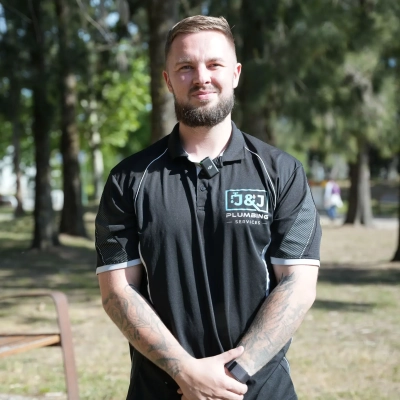 Jesse FowlerFounder, Plumber, J & J Plumbing Services
When a client sponsor changes mid-engagement, my first step is to restate the original scope and timeline to the new contact so we share the same mandate. I then frame any new asks as variations rather than part of the original deal. I use a clear line: “Happy to do that, but it is a variation, so I'll price it and confirm any timing changes before we move another step.” That keeps the relationship cooperative while protecting the agreed scope and schedule.
 Cristina AmyotPresident, EnformHR
Running EnformHR and advising over 400 client organizations over the last 25 years, I have navigated mid-engagement leadership transitions many times. My immediate first step is initiating the ELFEC framework—Engage, Listen, Frame, Envision, and Commit.
Rather than presenting a list of operational tasks, I frame the existing project around the language of business, showing how the current roadmap directly mitigates risk and protects bottom-line ROI.
We then prioritize an "early win" to rapidly build credibility and trust with the incoming sponsor. Demonstrating how the established scope directly solves their new department's pain points protects momentum without resetting the clock.
 Vera SunCEO, Wonderchat
When I work with new sponsors at Wonderchat, I start by showing them the math on pausing. Seeing the actual lost days and data usually changes their mind fast. We also get their direct reports involved early to map out who does what. It keeps the timeline safe. Honestly, sticking to the current plan is usually the best way to get real results.
 Lance TestaGroup Commercial Director, Van Compare
When the main contact changes, I tell the team and write a quick summary of where we stand. We handled this recently by jumping on a call with the new sponsor to make sure we agreed on the goals. That kept things moving. You should probably set a regular meeting schedule too so nobody gets confused and the work stays on track.
 Mike KordvaniFounder & CEO, SemNexus
I start by talking about actual usage rather than theory. It took a while, but the new sponsor eventually saw the progress and stopped asking to start over. One win from a support agent really helped prove we were growing. Showing real examples keeps the project steady and convinces new leaders to just stick with the plan.
 Charles LiuMarketing Director, Cubic Promote
Hi,
I'm Charles Liu, founder of Cubic Promote, a Sydney-based business employing around 30 people across Australia, the Philippines, Vietnam, and India.
When the main contact changes halfway through a project, the first thing I try to avoid is treating it like we've suddenly got a brand-new job. You've already done the briefing, made decisions, and probably have artwork, pricing or production underway. If you reopen every one of those decisions, you can lose days very quickly.
What works better for us is a short reset with the new contact, but not a reset of the project. I'd walk them through three things:
1. what the client originally wanted to achieve,
2. what's already been agreed, and
3. what still genuinely needs their decision.
For example, if we're halfway through an event merchandise order and a new marketing manager takes over, I'd show them the approved products, quantities, artwork, budget and delivery date. Then I'd say, "This is where the project stands today. These parts are already locked in, and these are the two or three things we still need from you."
In project management, that's really protecting the scope baseline. You're keeping the agreed-upon starting point instead of allowing every decision to be reopened just because the person has changed.
That framing is important because a new person will naturally want to understand what they're inheriting. You want to give them enough context to feel comfortable taking ownership without making them feel they need to redesign the whole project.
If they do want to change something, that's fine, but we make the trade-off clear. Changing a product, artwork or quantity after approval might affect cost or delivery. Once people can see that consequence, the conversation becomes much easier.
My rule is to give a new client contact context before asking them for decisions. You don't want to say, "Here's everything, what would you like to do?" You want to say, "Here's what your team has already agreed, here's where we're up to, and here's what we need from you next."
In our case, that usually protects the momentum while still giving the new person confidence that they're properly in control.
Charles Liu
Founder & Marketing Director
Cubic Promote
 James RowellChief Technology Officer, Capture Expense
Treat the change of sponsor as a change of audience and leave the work alone. The scope, timeline and delivery team stay exactly where they were, and the only thing that gets rewritten is the summary of why the project exists, because the new person did not choose it and needs to be able to explain it upwards in their own words.
We send that summary within a couple of days, framed around what the new sponsor inherits if the project stops. For an expense platform rollout that is usually a finance team still keying receipts by hand and a month-end that still runs late. The cost of pausing tends to be more visible than the cost of continuing, and a new sponsor is often relieved to find a project already moving that simply needs their signature.
What we hold back is any offer to revisit scope. If the new sponsor wants changes, they arrive as a formal change once the first milestone lands, which keeps the original timeline intact and gives them a decision they can own.
 Melody BrooksFounder, Stride Agency ApS
The first move is to get in front of the new sponsor with a one-page version of why the work exists. Not a status report. The problem, the decision that was made, the evidence behind it, and what happens next.
New sponsors reset engagements because they have inherited work they cannot defend to their own boss. If you hand them the argument, they usually keep the plan and take credit for it, which is fine by me.
The framing that works is asking what they are measured on this quarter, then showing which part of the existing plan already serves that. Something almost always does. You protect the scope by re-attaching it to their mandate instead of defending the original brief.
What I avoid is offering a fresh discovery process to seem accommodating. That is how a working engagement turns into three months of workshops.
 Siim KostabiFounder, 3Dstudio.co
Sponsor changes are scope reset attempts in disguise. The new person almost always wants to put their mark on something, and "let me review the brief" is how that starts.
The move that's worked for us: before any intro call, send a one-page summary of decisions already locked, the rationale behind each one, and what reopening them would cost in time. Not a defensive document. A map. When someone sees the work framed as a series of deliberate choices rather than a pile of inherited files, they engage with it differently.
On that first call, ask what they need to feel confident signing off, not what they'd change. Different question, different conversation. Most new sponsors want assurance the project won't blow up on their watch. Give them that frame and they tend to protect scope rather than expand it.
We've had this happen mid-render on multi-phase visualization projects, where the developer's project lead shifts and the incoming person starts pulling on the visual direction. The decision log bought us two weeks without a single revision loop reopening.
The timeline is the anchor. Showing concretely what a two-week reset costs against a fixed delivery date makes scope creep feel like a risk they own, not a change they're entitled to make.
 Nick SawinyhHead of Product & GTM, Veodyn
Treat the new sponsor as someone who has just inherited a liability, because from where they're sitting, that's what you are.
The instinct is to re-sell the work. Send the deck, walk the roadmap, explain the value. That is the reset you were trying to avoid, and you trigger it yourself by asking them to approve something they didn't choose. The previous sponsor's mandate doesn't transfer. Neither does their trust.
What has worked for me in fractional product roles is a first meeting with no roadmap in it at all. One question: what are you being measured on over the next quarter? Then I map the work already in flight onto their answer and show which pieces serve it, which are neutral, and which honestly don't. Naming the piece that doesn't serve them is what buys the rest. It signals I'm not defending scope, and it hands them a cheap decision to make, which every new sponsor is looking for in week one.
The scope survives because they have now made a decision about it rather than inherited one. Momentum survives because nothing paused while that happened.
The failure case is worth admitting: sometimes the new sponsor was brought in specifically to end the programme, and none of this helps. You find that out in the same meeting, which is its own kind of useful. Better to learn it in week one than after a month of re-presenting work to someone who was never going to keep it.
 Henter TimeaFounder, The Governess & Co.
This happens constantly in private household work. A search starts with one parent, then the other parent steps in, or an estate manager or family office takes over the file. Treat that as a new project and you lose weeks.
What protects momentum is not re-running the brief; it is asking the new person to react to it. I bring the agreed brief to the first call and ask three things: What here still holds? What has changed? What is now non-negotiable? Twenty minutes, and the new sponsor gets real authorship without reopening the scope.
The framing I use is that we are confirming a mandate, not starting one. It signals that work already exists and has value, while making clear the decision is theirs. In practice, the brief comes back with one or two edits rather than a rewrite, and the timeline holds. Full resets usually happen because nobody was direct enough to ask the new sponsor what they would actually change.
 Nick BaudoinFounder & President, Alkali
When a sponsor changes mid-engagement, my first step is a brief written recap that names an owner for every artifact and records what shipped, what is open, and who is responsible for each open item. I assign ownership per artifact, not per phase, so responsibilities are concrete and handoffs do not become ambiguous. The recap includes a definition of ready for the next handoff and a named decision-maker for each workstream so the new sponsor can sign off without reopening earlier commitments. That single document re-establishes mandate, preserves the agreed scope and timeline, and makes any requested changes visible and manageable rather than triggering a full reset.
 Joe PhillipsFounder, Master Joe Phillips
Start by presenting the existing written role contract and an outcomes-focused summary to the new sponsor as the first step. I use the documented role contract and its last review to frame the current mandate, focusing discussion on agreed outcomes, risks, and the timeline rather than redoing tasks. This keeps the conversation practical and prevents scope creep while making it clear which elements require human approval to change. A brief alignment meeting to confirm the sponsor's acceptance of the role contract and any limited adjustments typically restores momentum without a full reset.
 Margaret MartensExecutive Director, Water Well Trust
As Executive Director of the Water Well Trust since 2011, I've overseen dozens of well projects funded through shifting USDA grants and local partners, where key contacts often change mid-installation.
The first step is always to immediately surface the original beneficiary family's written account of their water crisis. This grounds the new sponsor in the human need without reopening scope negotiations.
In the La Plata, Maryland project, we shared the LaBille family's initial application details right away, which preserved the exact well depth and timeline even after the local partner rotated.
The same approach worked after Hurricane Helene when new state contacts came in: we referenced the family's direct description of their spring failure, keeping the grant terms and completion date locked in place.
 Harvey HillyerFounder, dermani MEDSPA®
When a new healthcare sponsor takes over, I ask them to list their top priorities immediately. It stops the project from drifting. Usually, things slow down because we guessed wrong on what mattered. Connecting our work to their goals saves us from restarting later. If they want to change the scope, I make them pick what gets cut. That way, we actually finish on time.
More from the same file.
When a project sponsor leaves or changes roles, even well-planned initiatives can quickly lose direction and momentum. This article draws on insights from experienced consultants who have successfully guided organizations through these critical transitions. Learn practical strategies for resetting stakeholder alignment and keeping projects on track when leadership changes occur.
Q&A · Apr 22
Executive sponsor turnover can derail even the most well-planned client projects, creating confusion around priorities and threatening timelines. This article presents five proven strategies for managing leadership transitions smoothly, drawing on insights from project management experts who have successfully navigated these challenging situations. Learn practical techniques to maintain momentum and preserve stakeholder alignment when key decision-makers change mid-project.
Q&A · Apr 15
A sponsor change can derail even the most carefully planned consulting engagement, but quick, strategic action can restore momentum and rebuild trust. This article outlines eight proven tactics that help teams realign after leadership transitions, drawing on insights from experienced consultants who have managed these disruptions firsthand. From re-establishing authority to securing fresh commitments, these steps provide a clear path to getting projects back on track.
Q&A · Aug 17