How Do You Integrate New Technologies into a Client's Business Model?
Integrating new technologies into an existing business model can be a complex challenge. We've gathered insights from Presidents and Engineers on their strategies for seamless adoption. From enhancing security with video analytics to offering tailored technology for enhanced productivity, discover the four innovative solutions they've successfully implemented.

§ How this was made
The perspectives in this article were written by the named contributors and submitted through Connectively. Connectively's automated system selected them and used AI to write the headline, introduction, section headings, summary sections, and illustration, and to make minor edits for clarity. Articles are assembled and published automatically. Report errors to corrections@connectively.us. How we make our content
Illustration generated with AI
- Enhancing Security with Video Analytics
- Meticulous Integration Architecture
- Strategic Cloud-Based Solutions Adoption
- Tailored Technology for Enhanced Productivity
What the experts said
4 on the panel
Enhancing Security with Video Analytics
 Eugene KlimaszewskiPresident, Mammoth Security
I'd say that the integration of advanced video analytics into our security offerings has been a great help. Thus far, it has empowered us to deliver insights and operational efficiency that were once out of reach.
By efficiently analyzing footage, video analytics sharpens our ability to quickly identify security threats and anomalies. This level of automation allows our team to focus on pivotal areas, significantly boosting our proactive security measures.
It represents a significant advancement in our mission to provide smarter, more responsive protection for our clients.
Meticulous Integration Architecture
 Will LiHardware Engineer, MOKO Technology
Integrating new technologies into a client's existing infrastructure can be challenging, but over my 10 years at Moko, I've developed effective strategies. The key is taking time to thoroughly understand both the capabilities of our latest innovations as well as the unique needs and constraints of each client's current systems and workflows. I work closely with account managers and the client to map out how our solutions can augment their processes rather than disrupt them. Whether it's our AI analytics engine or IoT sensors, the hardware has to seamlessly mesh with what's already in place. This meticulous integration architecture enables an agile and iterative deployment that puts end-user adoption first while future-proofing the infrastructure for continued innovation.
Strategic Cloud-Based Solutions Adoption
 Lawrence GuyotPresident, ETTE
In my role at ETTE, addressing the challenge of integrating new technologies into clients' existing business models is at the heart of what we do, especially for nonprofits and small- to medium-sized businesses where efficiency and cost-effectiveness are paramount. A key example of this has been our work with cloud-based solutions, where we not only help businesses migrate to the cloud but also ensure that this new technology aligns seamlessly with their operational practices and enhances their overall productivity without causing disruption.
Adoption of cloud telephony is another instance that illustrates our strategic approach. For a client hesitant about moving their traditional phone system to the cloud due to concerns about compatibility with existing workflows and systems, we conducted a thorough analysis to understand their specific needs. We then implemented a tailored cloud telephony solution that not only integrated smoothly with their CRM software but also offered scalability and improved data security. This process included significant user training and feedback sessions to ensure a comfortable transition for all employees, highlighting our commitment to fostering technology adoption that feels as natural as possible.
Furthermore, our introduction of a Virtual Chief Information Officer (vCIO) service for SMBs showcases our innovative strategy for harmonizing new technologies with existing business models. Many SMBs lack the budget for a full-time CIO, yet they face complex IT strategy needs. By offering vCIO services, we help these businesses develop long-term technology strategies that align with their goals and current operations, providing the expertise and insight of a CIO at a fraction of the cost. This role involves not just planning and implementation, but also educating our clients on the strategic value of technology investments, ensuring these new technologies become integral and beneficial parts of their business fabric.
Tailored Technology for Enhanced Productivity
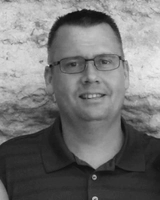 Todd CleppeExecutive Engineer and Sales, C-FAB LLC
Integrating new technologies into clients' existing business models has been a cornerstone of my work at C-FAB LLC, particularly in revolutionizing food packaging equipment and automated lubrication systems. With over 25 years of experience in engineering, manufacturing, and business enhancement, my approach emphasizes custom solutions tailored to not only integrate seamlessly with current operations but also to elevate productivity and efficiency. For example, when introducing automated lubrication systems to an industrial mining client, we focused on compatibility with their existing machinery, ensuring a smooth transition without halting their operations.
One specific challenge we faced involved integrating VibraFloor technology into an existing bulk storage facility without disrupting daily operations. By conducting a detailed analysis of the client's current setup and work processes, we designed a phased implementation plan. This plan not only facilitated the integration of the new system but also allowed for continuous operation, minimizing downtime. The result was not just an enhancement of the facility's efficiency but also a significant reduction in manual labor costs and an increase in safety, showcasing the tangible benefits of integrating new technologies.
Furthermore, through our Machine Reliability Programs, we've demonstrated time and again how a strategic approach to technology integration can lead to increased productivity, reduced equipment downtime, and extended machinery life. By providing a comprehensive package of analysis, services, equipment, and support customized to each client’s needs, we ensure that new technologies don't just get added but become integral, valuable assets to the business model. This tailored approach, underpinned by concrete data, allows us to mitigate the risks associated with adopting new technologies while maximizing the return on investment for our clients.
Write for us
Have something to say about this beat?
Submit an article or do an interview for Consultant Magazine.
Write for us →Related briefs
More from the same file.
Business Consulting for Foreign Companies Expanding into China
Article · Anita Yao · Jun 23
How Consultants Decide to Reset or Exit a Struggling Client Project
Consultants face tough decisions when client projects veer off course, and knowing when to reset or walk away separates successful professionals from those who waste time and resources. Industry experts reveal the specific warning signs they monitor—from vanishing accountability to broken assumptions—that trigger decisive action. This article compiles practical frameworks these professionals use to evaluate struggling engagements and choose the right path forward.
Q&A · Consultant Magazine · May 25
Prioritize Workloads in Consulting Teams When Demand Spikes
When consulting demand surges, teams struggle to separate urgent work from noise and often accept commitments they cannot sustain. This article draws on expert strategies to help managers implement practical prioritization frameworks that protect capacity while meeting client expectations. The fifteen methods outlined here address everything from intake policies to workload caps, giving leaders concrete tools to maintain quality when requests pile up.
Q&A · Consultant Magazine · May 11