
The Source for Consulting ProfessionalsUpdated October 21, 2026
Consulting readouts often fail because they present information without driving action. This article breaks down proven structures that push stakeholders toward concrete decisions rather than endless discussion. Drawing on insights from experienced consultants, these frameworks help teams secure clear approval or rejection instead of vague feedback.
 RJ
RJ
2 on the panel
The key is to stop treating consensus as the goal. In senior rooms, consensus often becomes a polite delay mechanism. The real objective is decision quality under time pressure, which means defining the choice, the decision maker, and the acceptable level of uncertainty before the discussion begins. When those three elements are explicit, the room becomes sharper and far less political.
The sequence that works best for me is context, choice, consequences, commitment. The most powerful slide is the commitment page, which lists the decision requested today, the executive owner, the first milestone, and the metric that will prove the decision was right or wrong. That final step makes the choice feel operational. Once accountability is visible, abstract debate gives way to action.
Raj JaganiCEO, Tibicle LLPMost readouts fail because the decision gets buried at the end, after forty minutes of context nobody asked for. By the time the room reaches the actual choice, energy's gone and people default to "let's take this offline," which just means no decision happened.
The sequence that works: state the decision needed in the first two minutes, before any supporting analysis. Then show the two or three real options with tradeoffs stated plainly, not buried in caveats. Every option ends with a specific recommendation, not "it depends." The room isn't asked to absorb information and form an opinion live; they're asked to react to a clear position.
The one rule I hold to: no slide gets labeled "for discussion" if a decision is actually needed that day. Calling it discussion gives people permission to defer. Calling it a decision doesn't.
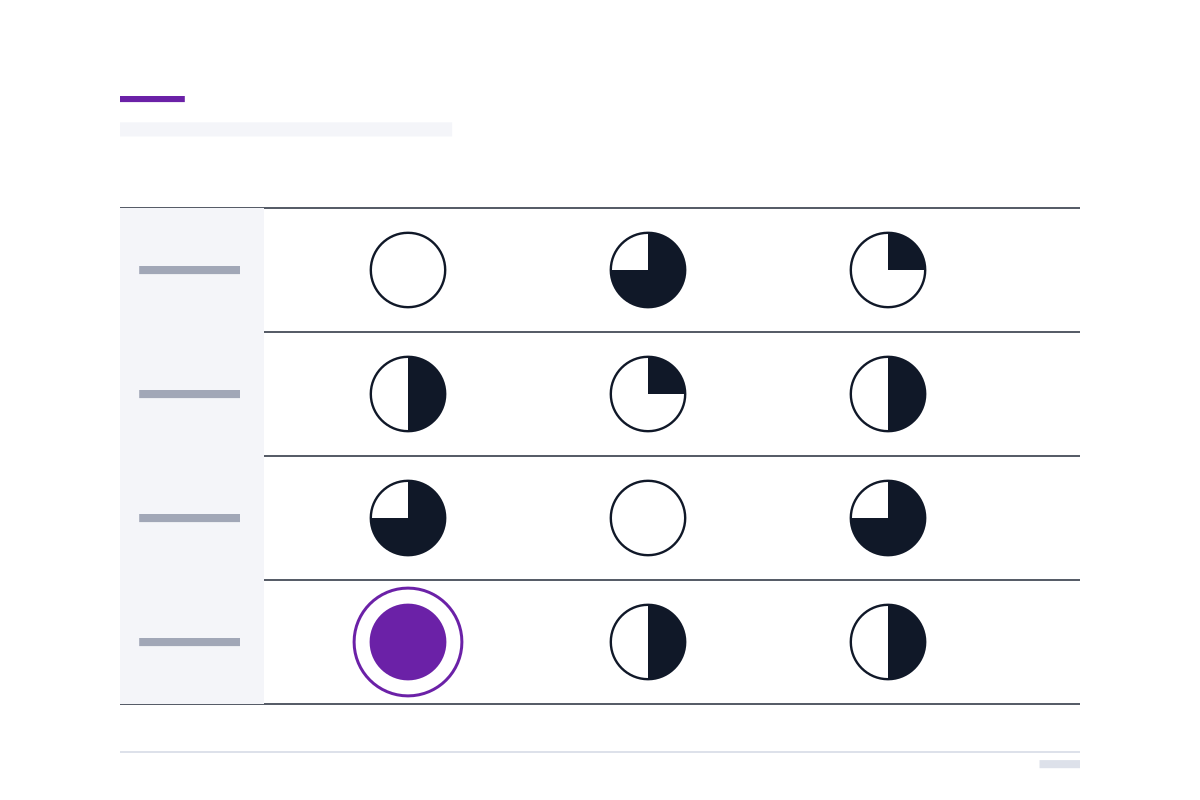
An executive scorecard turns a broad consulting readout into a decision tool. It should show the few measures that matter most, such as expected value, cost, risk, and fit with strategy. Each measure needs a clear pass or fail threshold that leaders approve before the meeting.
This keeps the group from changing the standard after seeing the results. A simple visual status makes it easy to see whether the recommendation qualifies for approval. Build and approve the scorecard before the next readout.
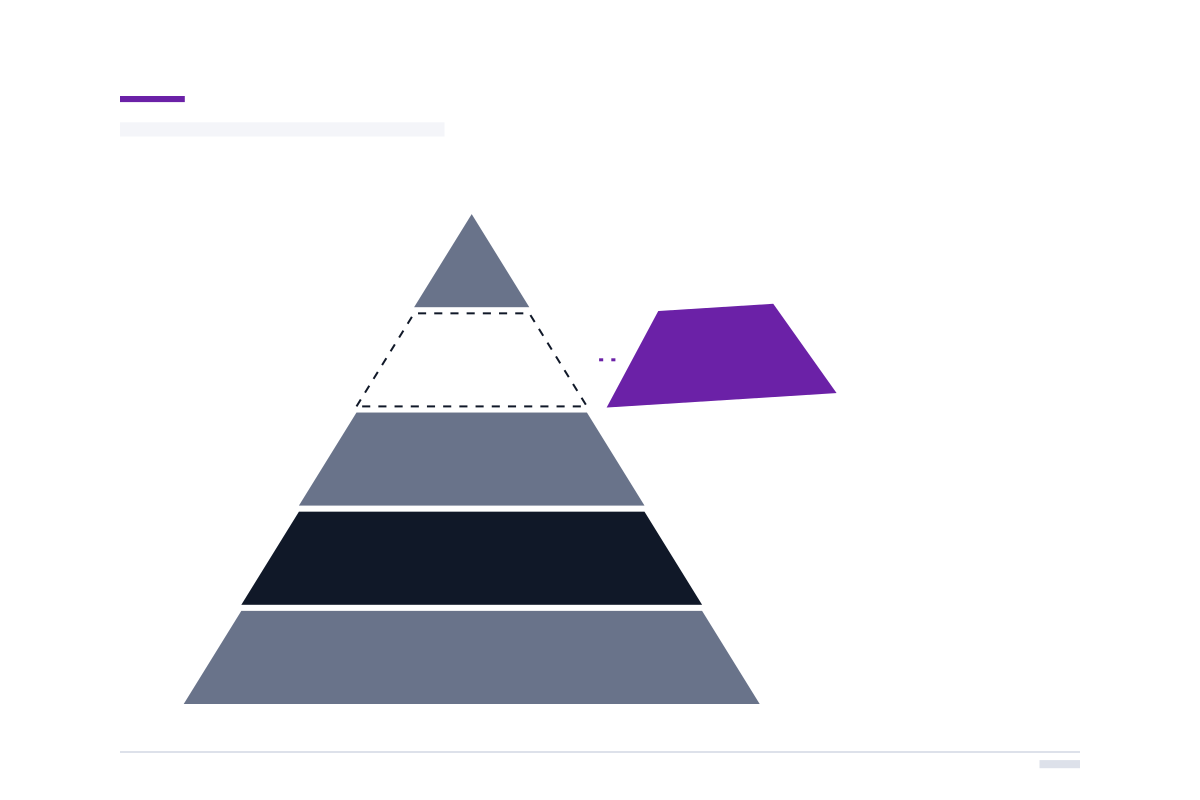
A strong readout makes a clear line between what is known and what is still assumed. Confirmed evidence should be tied to data, interviews, tests, or other reliable sources. Assumptions should be labeled plainly, along with the possible effect if they prove wrong.
This protects leaders from approving a plan based on uncertain claims presented as facts. It also focuses discussion on the few unknowns that could change the decision. Mark every assumption and evidence source clearly in the presentation.
A consulting recommendation becomes more concrete when approval is tied to a funding governance gate. The group should decide whether the evidence is strong enough to release the next budget, team capacity, or project phase. This turns a vague agreement into a clear business commitment.
If the answer is no, the gate should define what proof is needed before funding can move forward. This approach also prevents work from continuing without an active sponsor decision. Link the final recommendation to a specific funding decision now.
A decision meeting can stall when several leaders have equal authority and disagree. Naming one person to resolve deadlocks prevents an issue from remaining open without an owner. That person should have clear decision rights and access to the needed facts.
The role is not to ignore input, but to make a final call after hearing it. Everyone should know in advance when and how the deadlock owner will act. Assign a deadlock owner before the readout begins.
Written stakeholder votes can reveal the real position of each decision maker before a meeting becomes a debate. Asking for a yes, no, or conditional yes creates early accountability. Conditional votes should state the exact concern that must be addressed for approval.
This process exposes disagreements that might otherwise stay hidden until the end of the readout. It also gives the facilitator a clear map for where discussion is needed. Request written votes before the next decision meeting.
More from the same file.
Stakeholder conflict derails consulting engagements when teams lack structured frameworks for making aligned decisions. This article draws on insights from seasoned consultants who have developed ten practical techniques to transform disagreement into clarity and forward momentum. These methods work because they force hard trade-offs early and establish shared decision-making rules before tensions escalate.
Q&A · Jul 22
Slow decision-making is one of the biggest obstacles consulting teams face when trying to deliver results on time and within budget. This article explores six proven strategies that help accelerate client choices while maintaining appropriate oversight and minimizing project risk. These techniques are drawn from insights shared by experienced consultants who have successfully managed high-stakes engagements across multiple industries.
Q&A · May 6
Board members need clear, actionable information to make confident decisions, but many pre-read materials fall short. This article breaks down three strategic approaches that turn routine board packets into persuasive documents that drive approval. Industry experts share proven techniques for presenting ROI data, framing options effectively, and illustrating potential outcomes in ways that resonate with decision-makers.
Q&A · Jan 28