
In the late 1990s, while serving as an operations analyst at Prudential, I worked alongside a Lotus Notes developer to map our department’s entire operations workflow. Our objective was straightforward: connect every disparate database to a single interface, configure the necessary access rights, and let the software facilitate the ease of work.
What made this transition so profoundly impactful was Prudential’s structural heritage. The company’s history was built entirely on decentralized field offices—an ecosystem historically defined by a lack of synchronization and isolated silos.
By executing a rigorous workflow analysis and anchoring the software to processes, we proved that even an organization rooted in fragmentation could transition into a collaborative, cohesive unit. The technology didn't just link data; it blended seamless connectivity directly into the company culture.
Nearly three decades later, the underlying capability to make business applications talk amongst themselves remains unchanged. Yet, look inside the backend of the average modern consulting firm, and you will find partners heavily weighed down by a hidden, manual "friction tax"—the heavy burden of manual data entry. The persistent drag on scaling a practice isn't a lack of capable technology; it is an organizational and cultural failure to leverage it.
Saving Your Team from Administrative Drudgery
When a boutique firm wins a new engagement, a predictable administrative chain reaction triggers. A contract is signed, an invoice is generated, a client folder is created, a project management board is spun up, and welcome communications are deployed.
In a low-efficiency firm, a human intermediary executes every single one of these steps manually. Copying a client’s email from an intake form to paste it into a CRM or a lifecycle tracking tool takes only three minutes. However, when multiplied across multiple engagements, data fields, and status updates, this manual cutting and pasting fractures your day.
More importantly, it introduces unnecessary risk. A single mistyped character can derail a critical client deliverable, disrupt billing schedules, or stall a kickoff timeline. True operational efficiency requires making your existing software applications talk amongst themselves, ensuring data flows instantly from one trigger event to the next without human intervention.
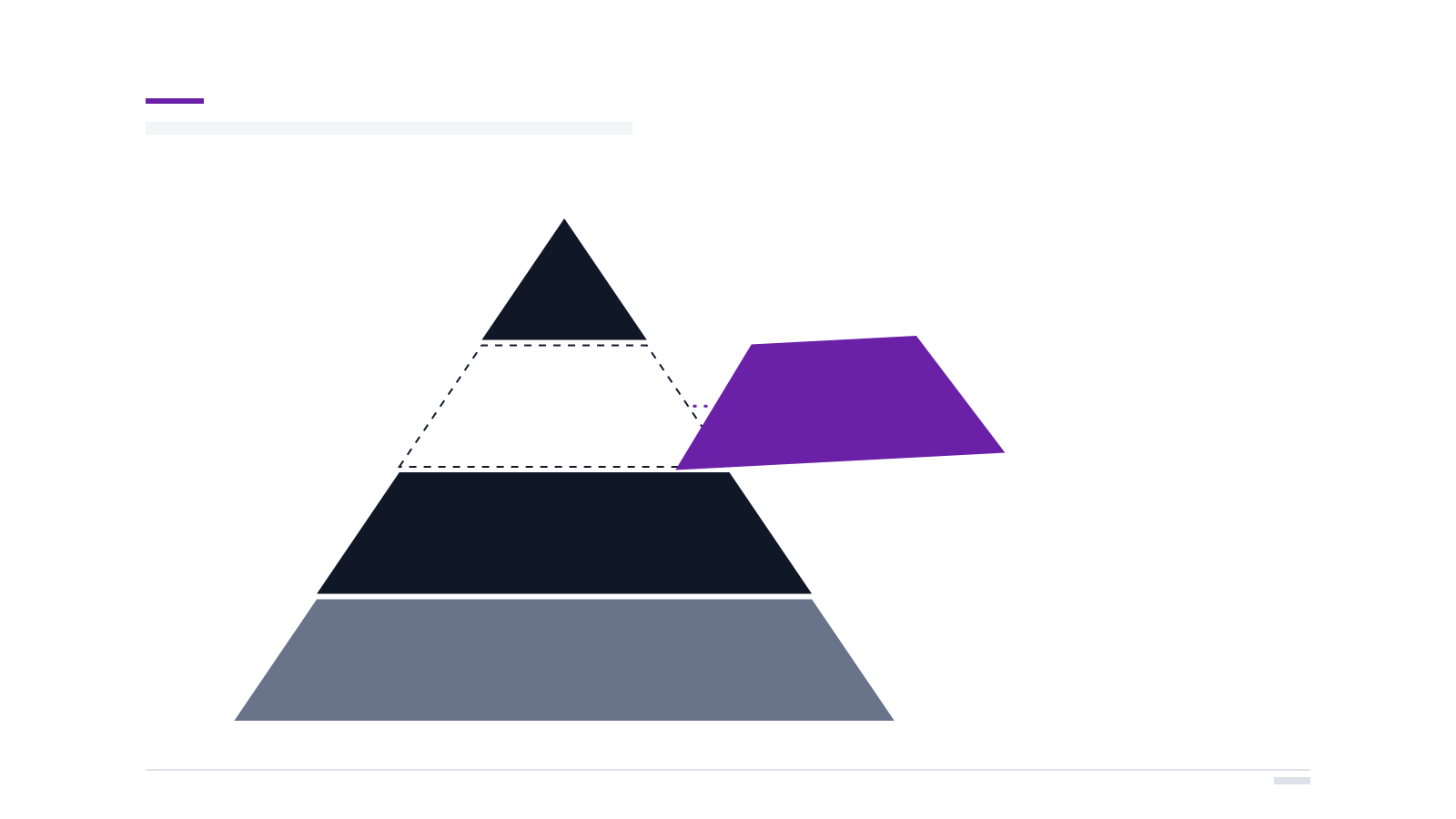
The Three Core Pillars of Backend Automation
Transforming your consulting practice into a frictionless system relies on three strict operational principles:
- Pillar 1: Single-Source Data Entry. Client information should be entered exactly once by the end-user or client. From that initial entry, backend software triggers must automatically populate all supporting applications, from invoicing to project workflows.
- Pillar 2: Standardized Tool Interoperability. Every application in your tech stack must have an open API or native integration capability. Too often, software choices within a growing firm become highly political—driven by individual team preferences or trendy user interfaces rather than systemic utility. If a software tool requires a manual workaround to share data with your central hub, it is an operational liability, regardless of how popular the platform is.
- Pillar 3: Real-Time Event Syncing. Information gaps occur when applications update on a delay or require manual reconciliation. Real-time syncing ensures that project milestones, contract status, and resource allocations are accurate down to the second.
Step-by-Step Blueprint for a Lean Consulting Pipeline
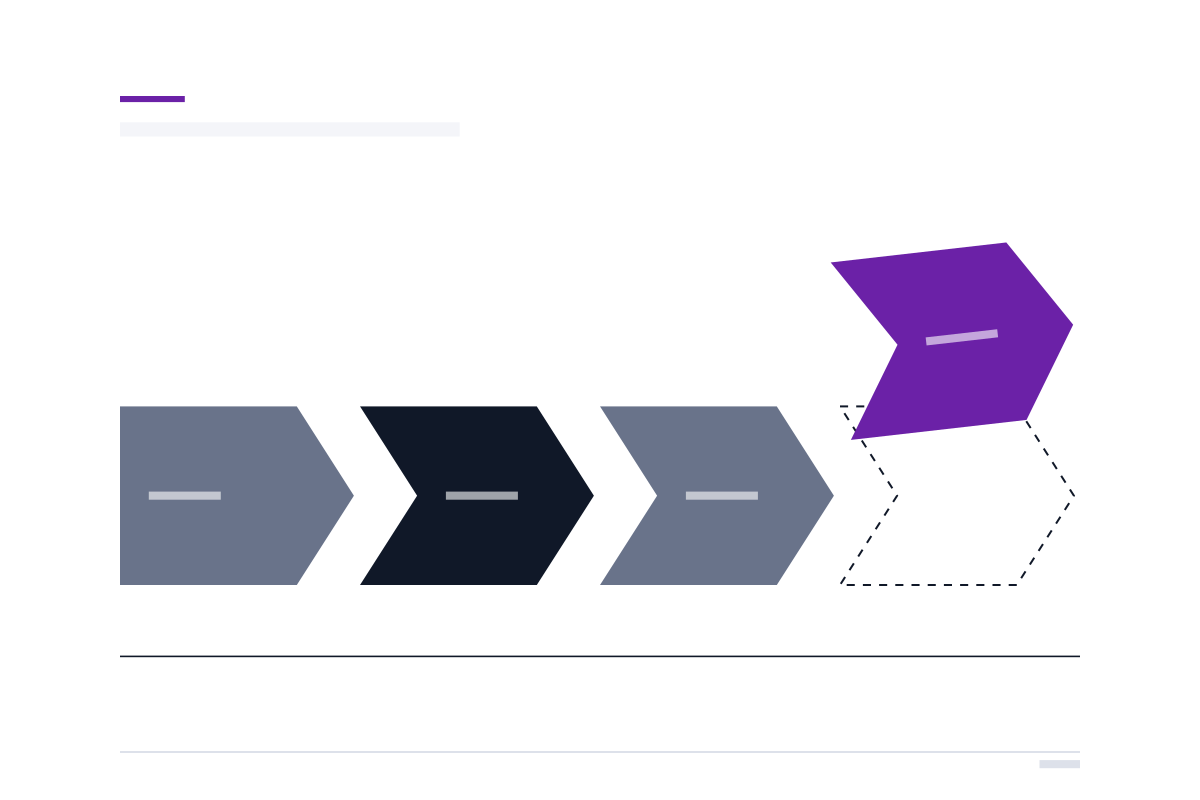
To eliminate manual bottlenecks, map your backend infrastructure to a standardized, automated progression model.
Phase 1: Intake and Provisioning
The moment a prospect transitions into an active client, your onboarding ecosystem should deploy automatically.
- The Trigger: A signed digital contract or paid initial invoice.
- The Automated Response: Your core system reads the client metadata and instantly spins up a dedicated shared workspace, generates a pre-formatted project board containing your practice’s standardized milestones, and adds the client to your active CRM pipeline.
Phase 2: Lifecycle Tracking and Milestone Management
As execution progresses, status updates should occur as a byproduct of actual work, not administrative overhead.
- The Action: A consultant marks a phase deliverable as complete on a project board.
- The Automated Response: The system instantly updates the internal KPI tracker, logs the completed milestone for end-of-month reporting, and triggers an automated client notification outlining the next immediate steps.
Phase 3: Offboarding and Relationship Nurturing
Closing an engagement cleanly is just as vital for local market credibility as a strong kickoff.
- The Trigger: Marking a project archive milestone.
- The Automated Response: The system initiates a final offboarding sequence, sends a standardized feedback link, and schedules a series of long-term relationship check-ins over the next 6 to 12 months to monitor ongoing progress.
Designing for Business Freedom
Automation is not about adding complex software to your stack; it is about establishing process discipline. When your backend infrastructure handles the repetitive data logistics, you stop wasting energy on operational friction. This structural shift moves your time away from manual data maintenance and returns it directly to high-value strategic execution, client advisory work, and sustainable business design. In the modern marketplace, efficiency is the new elegance.
Editorial Takeaway: Elevating your firm's operational efficiency requires a deliberate look at how your tools connect. For a granular, step-by-step breakdown on linking your software platforms to eliminate manual friction completely, you can utilize this comprehensive guide to software integration to optimize your practice’s backend workflows.