
TLDR: For years our consulting engagements lost the first month to discovery, the slow scramble to learn a new client's business before we could do anything useful. We rebuilt onboarding into a fixed system, and ramp time to first real work dropped from about four weeks to under two. Operational efficiency in consulting is not about working faster. It is about removing the friction in how you start.
I used to dread the first month of any new consulting engagement. Not because the work was hard, but because it was formless. A client would sign, and then both sides would sink into the swamp of getting started. I would ask for access to their analytics, and it would take a week to arrive because nobody knew which login had it. I would request their last campaign data, and receive three contradictory spreadsheets from three different people. Every kickoff was a fresh act of improvisation, and the client was paying premium rates to watch me find my footing.
The pattern became impossible to ignore when I lined up our last ten engagements and looked at when we actually delivered something the client could use. The answer was consistently around week four. A month, every time, lost to the same avoidable scramble. We were not slow at consulting. We were slow at starting. So I treated onboarding as the problem it actually was: a broken operational process, not an unavoidable cost of doing business.
The Problem With Treating Onboarding As Improvisation
Most consultants and small firms treat onboarding as a relationship phase rather than a process. You meet, you chat, and information dribbles in as people remember to send it. It feels collaborative and human. It is also wildly inefficient, and the inefficiency is invisible because everyone accepts it as normal.
The hidden cost is enormous. Every engagement that starts from scratch re-solves problems you already solved in the last ten. You re-explain what access you need, re-discover that the client's data lives in five disconnected places, and re-learn the same lessons, on the client's clock, every time.
McKinsey has written extensively about how standardizing repeatable processes is where most operational efficiency gains actually come from, far more than from working individuals harder. Onboarding is the most repeatable process a consultancy has, and the one most firms leave entirely to improvisation. We were repeating the same forty hours of friction on every client.

What We Built: A Fixed Onboarding Sequence
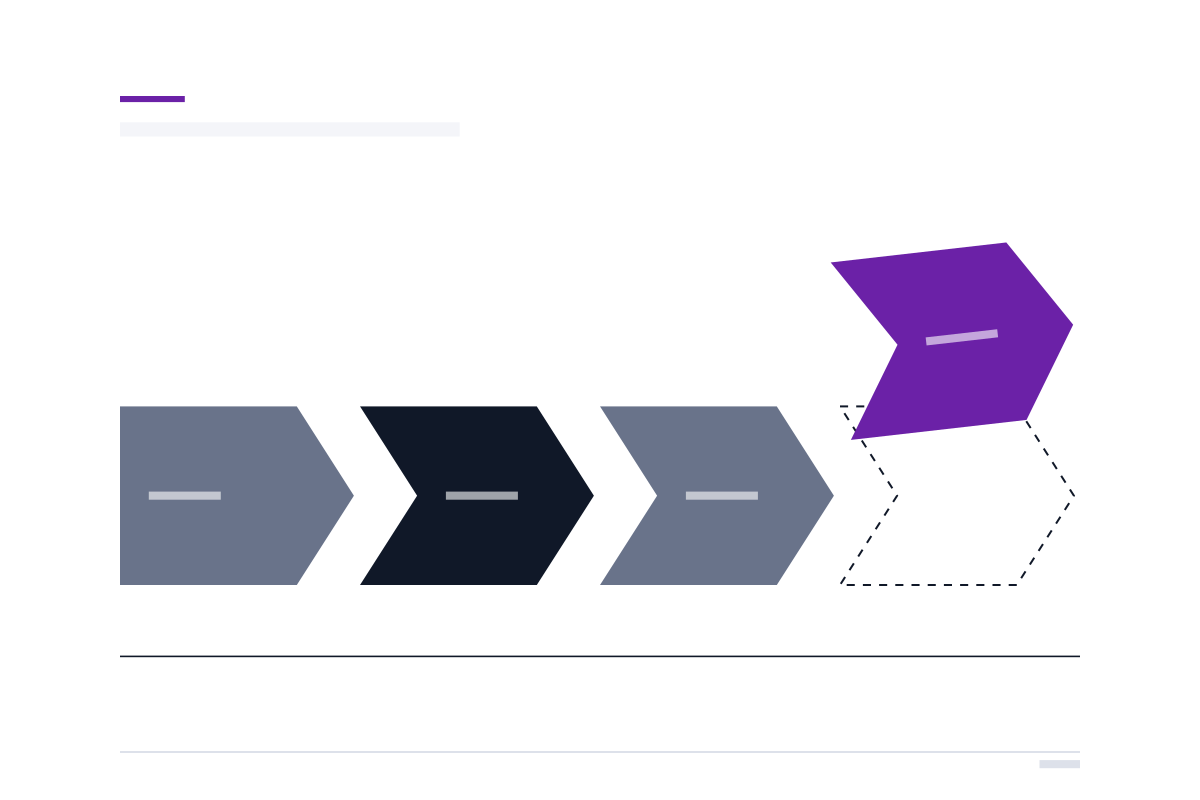
The fix was not clever. It was disciplined. I mapped every single thing we needed from a client before we could do real work, every access, document, and question, and turned it into a fixed sequence. The whole thing now lives in a structured intake the client receives the day they sign. It does three jobs that used to eat the first month.
- One access checklist, sent on day one. Every login and permission we will need, listed once, with a clear owner on the client side for granting each. No more discovering a missing access in week three.
- One structured data request, not a conversation. Instead of asking piecemeal as I realize I need things, the client gets a single organized list of what to send and in what format. The three contradictory spreadsheets became one clean intake.
- A fixed set of discovery questions, answered in writing first. The questions I used to ask in meetings now get answered before we meet, so the kickoff starts from understanding instead of from zero.
The kickoff itself changed completely, from a fact-finding interrogation to a working session where we already had the basics and could spend the time on judgment. That single shift is most of where the saved weeks came from.
The Before And After, In Real Numbers
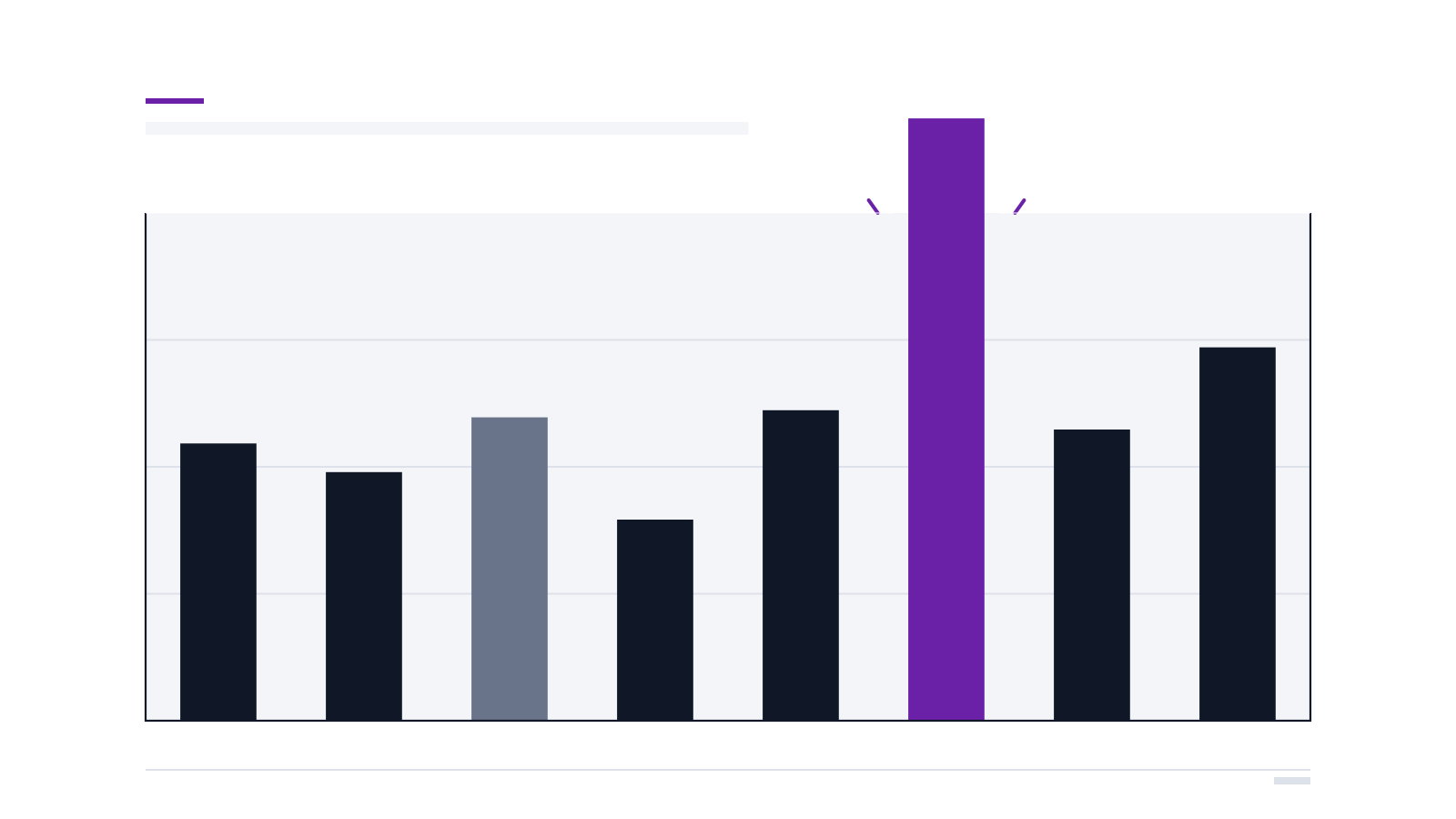
Before the system, across our previous ten engagements, the time from contract signing to first usable deliverable averaged about 27 days. The first week went to chasing access, the second to untangling data, the third to discovery we should have done upfront. Only in the fourth did real work begin.
After the system, that same window dropped to under 13 days, less than half. Access arrives in days because the checklist makes ownership clear. Data arrives clean because we asked for it in one structured request. Discovery is largely done in writing before the kickoff, so the kickoff launches the real work. On an engagement priced around $18,000 (AED 66,000), the two weeks we used to lose were real margin, either eaten as unbillable scramble or quietly padded into the price.

Why The System Beats A Smarter Consultant
Here is the part that surprised me. The system did not just save time. It made the work better, and less dependent on me.
When onboarding was improvisation, the quality of a start depended entirely on how sharp I was that week and whether I caught the gaps. A fixed system does not have bad weeks. It asks the same complete set of questions every time, so nothing gets forgotten because I was tired or distracted. The Harvard Business Review case for documented process over individual heroics is exactly this: a written system delivers consistently in a way even a talented individual cannot.
It also made the firm less fragile. Because onboarding is now a documented sequence rather than knowledge in my head, someone else can run the start of an engagement without me hovering. That is the difference between a consultant with good habits and a consultancy with a real system. The habits leave when the person does. The system stays.
What I Would Tell Any Consultant Or Small Firm
Look at your last several engagements and find the moment you actually delivered something the client could use. If that moment is consistently weeks after the contract was signed, you do not have a discovery problem. You have an operational efficiency problem hiding inside your onboarding.
The fix is not working harder during the start. It is removing the improvisation entirely. Map everything you need before you can do real work, turn it into a fixed sequence, and send it the day the client signs. Access becomes a checklist with owners, data a single structured request, discovery something answered in writing before the kickoff.
I no longer dread the first month, because there barely is one anymore. We start working in week two, on a foundation that is the same solid every time. The weeks we used to lose to chaos are now weeks of actual work, the only thing a client was ever paying us for.