
I have watched small teams outperform companies five times their size, and I have watched small teams collapse under their own process while a competitor with half the headcount ate their lunch. The difference was almost never the tool stack. It was whether anyone had actually redesigned the workflow before a piece of software got bought.
At Plondo Network, we build software and run marketing programs for direct selling companies and small businesses. Before any of that, I spent years in direct response marketing, running campaigns for DirecTV, ADT, and Vivint. That business taught me something that consulting clients still resist hearing. A broad job with one owner is not a process. It is a bet that one person will hold every detail in their head correctly, every time. Eventually they will not, and the fix everyone reaches for is a new tool. That is backwards.
The mess gets automated too
When a client hires us to speed up how their marketing or operations team works, the first thing we do is map the actual path a piece of work takes from request to done, not the path on the org chart. Almost every time, we find three or four handoffs that exist only because two departments do not trust the output of each other. A request bounces from sales to production to review and back to sales again, and at every bounce someone repeats context that was already written down somewhere, just not somewhere the next person checks.
Buying software at that point does not fix anything. It gives the mess a nicer interface. I have sat through the aftermath of this more than once. A company installs a project management tool, everyone loves it for three weeks, and then it turns into the same chaos with better colors, because nobody changed who was allowed to make which call. The tool amplified the process that was already there. That is the whole lesson in one sentence.
What actually works
The gains that stuck for our clients, and for our own team, came from three changes we made before any tool changed.
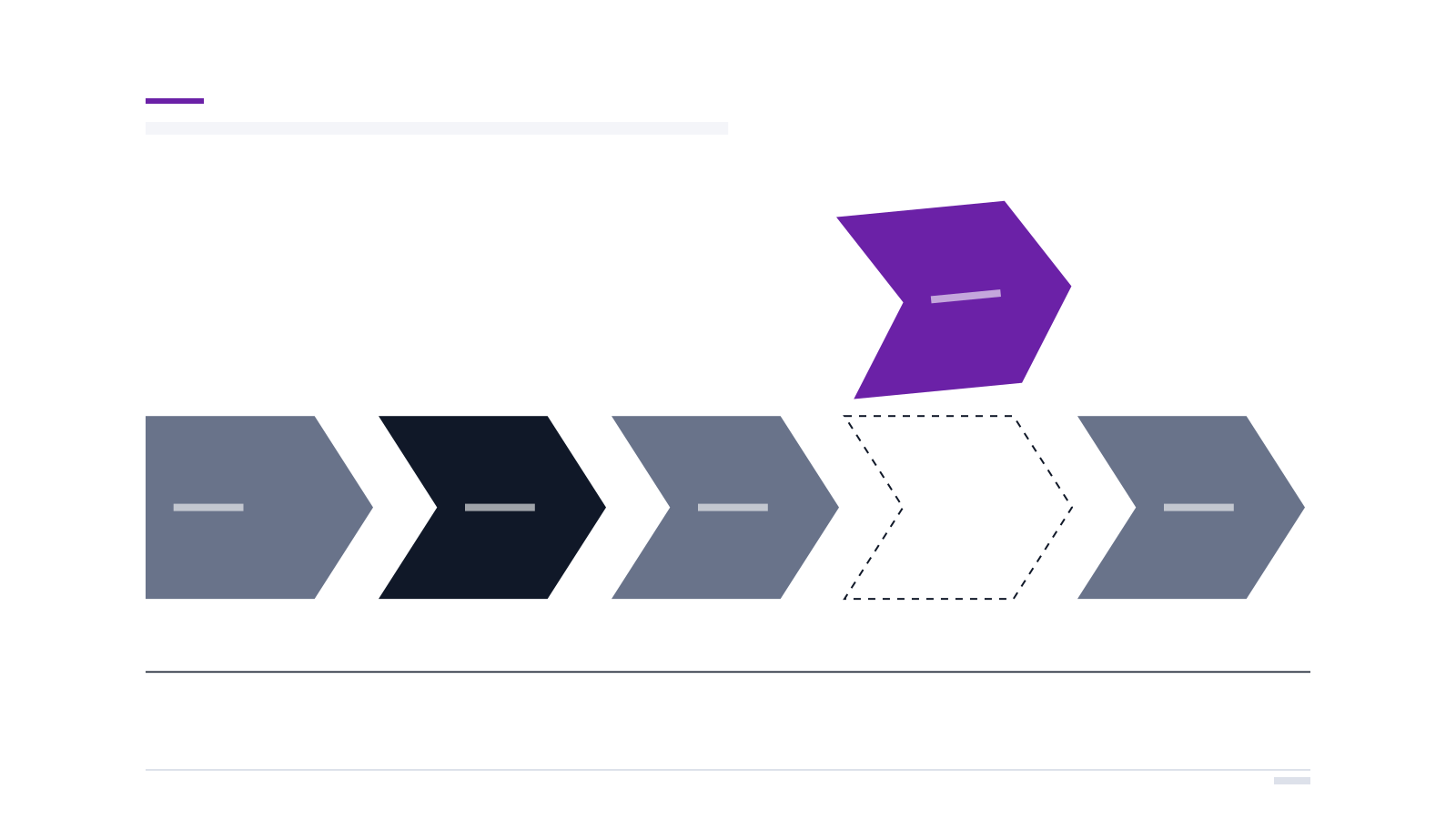
First, we split broad jobs into narrow stages that someone can check without redoing the work. A stage like write the ad copy is not checkable. A stage like write three headline options against the brief is checkable in under a minute. When a stage is checkable fast, review stops being a meeting and becomes a five-minute glance. We rebuilt our own content pipeline this way, and the number of drafts that came back for a full rewrite dropped hard, because errors got caught one stage earlier, while they were still cheap to fix.
Second, we started measuring cycle time instead of activity. Nobody on our team gets asked how many tasks they touched today. We ask how long a request sits between when it was submitted and when it was actually finished, and we watch where the time piles up. Almost always it piles up in waiting, not working. A request sits in someone’s queue for two days before anyone opens it. That is a workflow problem, and no software fixes a queue that nobody owns.
Third, we killed status meetings that existed only because nobody trusted a shared source of truth. If a board, a doc, or a dashboard shows the true state of every request, a meeting to ask what is the status of a task is a meeting that should not exist. We cut two recurring meetings this year simply by making sure the board was actually current, and by naming one person per stage who was accountable for keeping it that way. The meeting was not the problem. The missing owner was.
None of this required new software. It required agreeing, in writing, who owns each decision at each stage, and refusing to let a request move forward without the name of that owner attached. Only after that structure held for a few weeks did we introduce tools, and by then the tools had a clean process to amplify instead of a messy one to encode. We have used this same approach helping clients at https://plondo.com rebuild their own operations before touching a single new platform.
If you are a consultant reading this and wondering where to start this week, do not start with a tool audit. Pick one workflow your client complains about, write down every handoff it currently takes from request to done, and ask out loud who owns the decision at each step. You will usually find at least one stage with no owner at all. Fix that first. The software conversation can wait.