
When operations consultants walk into a manufacturing facility, they look for the bottleneck first. The slowest step in the line determines the throughput of the whole system. The same logic applies to digital businesses, but most leadership teams have not yet drawn the parallel. Their website is part of their operating system, and its performance is often the slowest step on the line. Treating it that way changes the diagnosis and the prescription.
Over the past several years, I have audited hundreds of WordPress and Shopify websites for businesses ranging from small services firms to multi-million dollar e-commerce operations. The framing that produces the best results with executive teams is straightforward. Site performance is throughput. Conversion rate is yield. Bounce rate is scrap. Every team understands those terms once they are translated into something familiar.
Here is how I would suggest a consulting team approach a performance engagement, whether internally or for a client.
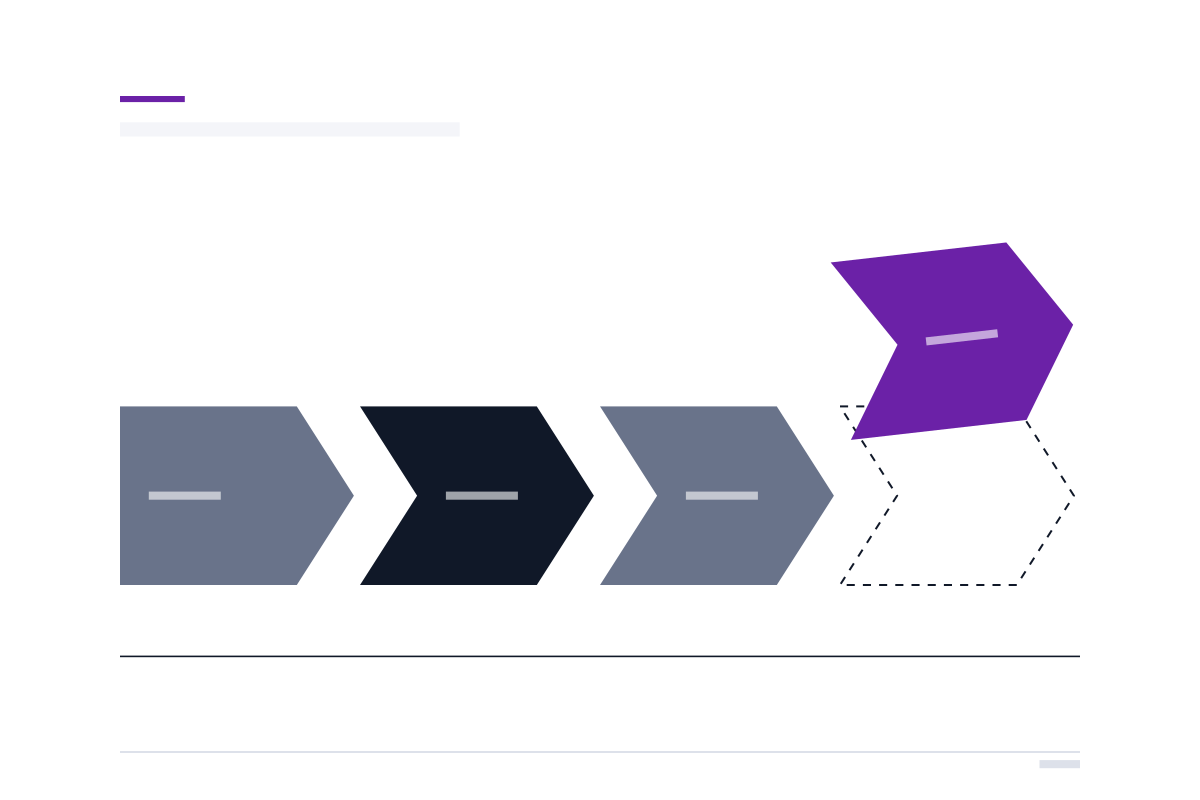
Define the value stream. What does a customer or prospect actually do when they reach the site? For a services firm, the stream might be search ad to landing page to form fill to phone call. For an e-commerce business, it is paid social to product page to cart to checkout to confirmation. Without that map, performance work becomes an academic exercise. With it, every optimization can be tied back to a step that actually generates value.
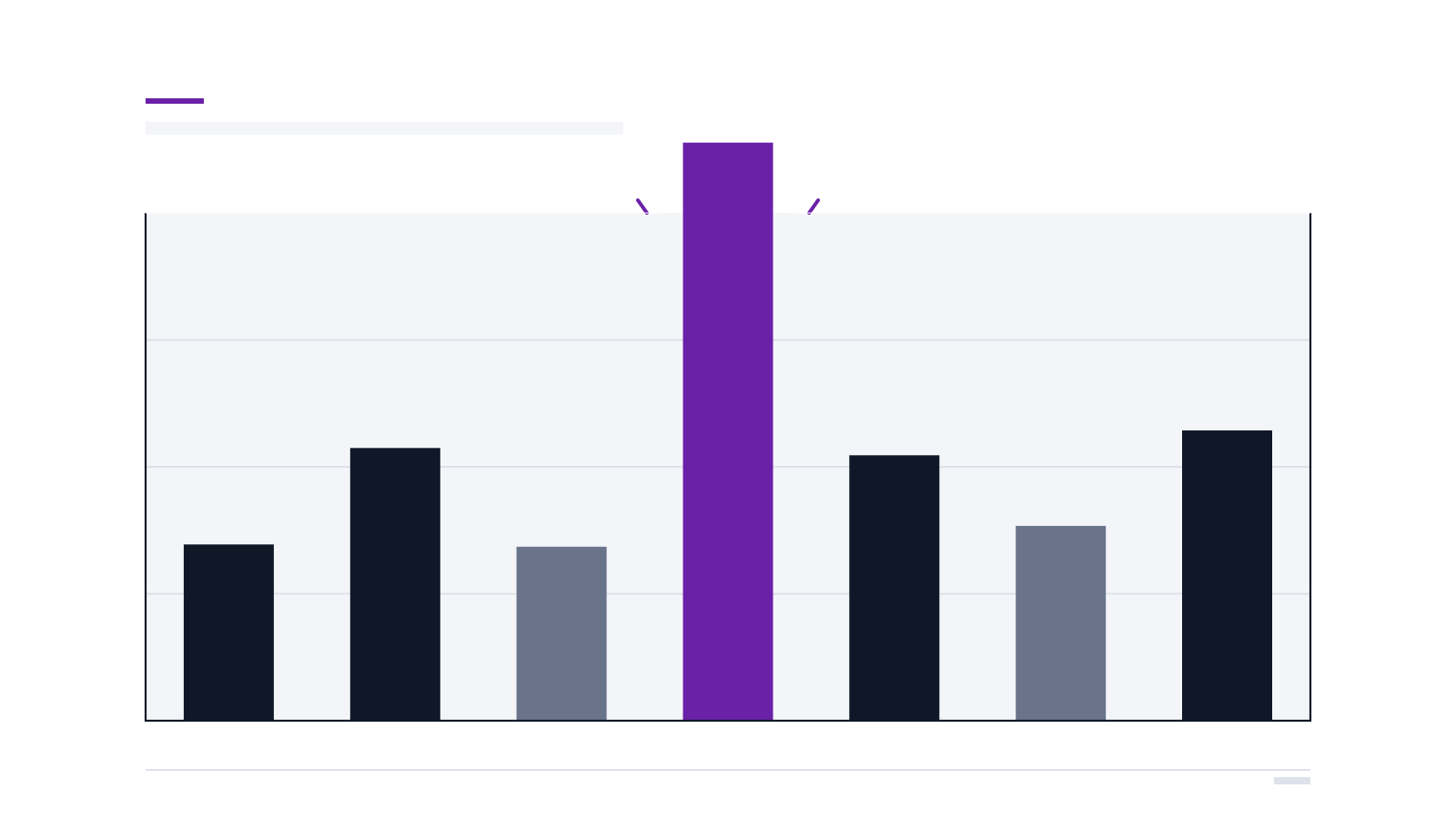
Measure the cycle time of each step. Modern analytics tools, paired with real-user monitoring data, will tell you how long each of those steps takes for typical visitors and how often visitors drop off. Pay particular attention to mobile, where most traffic now lives and where performance gaps are widest. The pattern in most engagements is a single step that costs disproportionate value, often the first interactive moment on the landing page or the first interaction in the checkout flow.
Find the constraints. With cycle times in hand, the constraint usually becomes obvious. It might be a heavy hero video that delays first paint, a third-party tag that blocks the main thread, an unused front-end framework, or a hosting environment that cannot handle peak load. The discipline is to confirm the constraint with data rather than fix what feels broken first. Lean and Theory of Constraints both teach the same lesson here. Improvements made anywhere except the bottleneck do not improve throughput.
Apply small, reversible changes. Once the constraint is identified, change one variable at a time. Run an A/B test or a before-and-after comparison and confirm the result with both performance metrics and business metrics. The most common failure mode I see in consulting engagements is bundling fixes together so that the team cannot tell which change drove the result.
Standardize and document. Consultants who deliver a one-time performance lift but no operating procedure usually find the gains have eroded a year later. The deliverable is not just a faster site. It is a quarterly performance review, a tagging governance policy, an image optimization workflow, and a vendor evaluation rubric that survives the engagement.
Build a feedback loop with the client team. The most durable improvements come when the in-house team owns the metrics after you leave. Train someone on the team to read a Core Web Vitals report. Show them how to run a basic audit on a new landing page. Make it part of how they work, not a black box only the consultants understand.
There are a few strategic questions worth asking at the executive level during these engagements.
Is performance an explicit owner's responsibility, or is it an orphan? Without an owner, performance gains erode with every release.
Is your tag stack reviewed at least annually? Marketing and analytics tools accumulate. Each one is a small operating decision with a measurable cost.
Is performance part of your vendor selection criteria? Choosing a CMS, a payment provider, or a chat tool without asking how it affects load time is no different than choosing a piece of factory equipment without asking how it affects throughput.
Is performance reported alongside revenue and customer acquisition cost? If not, you are missing one of the highest-leverage drivers of both.
Operational efficiency consultants have always argued that small, durable improvements compound over time. Web performance is one of the cleanest examples of that logic in a digital business. Treat it as a process, not a project, and the gains stick. Treat it as a one-time clean up, and the bottleneck will return within a year. Either way, your client's customers are voting with their attention every time a page loads.